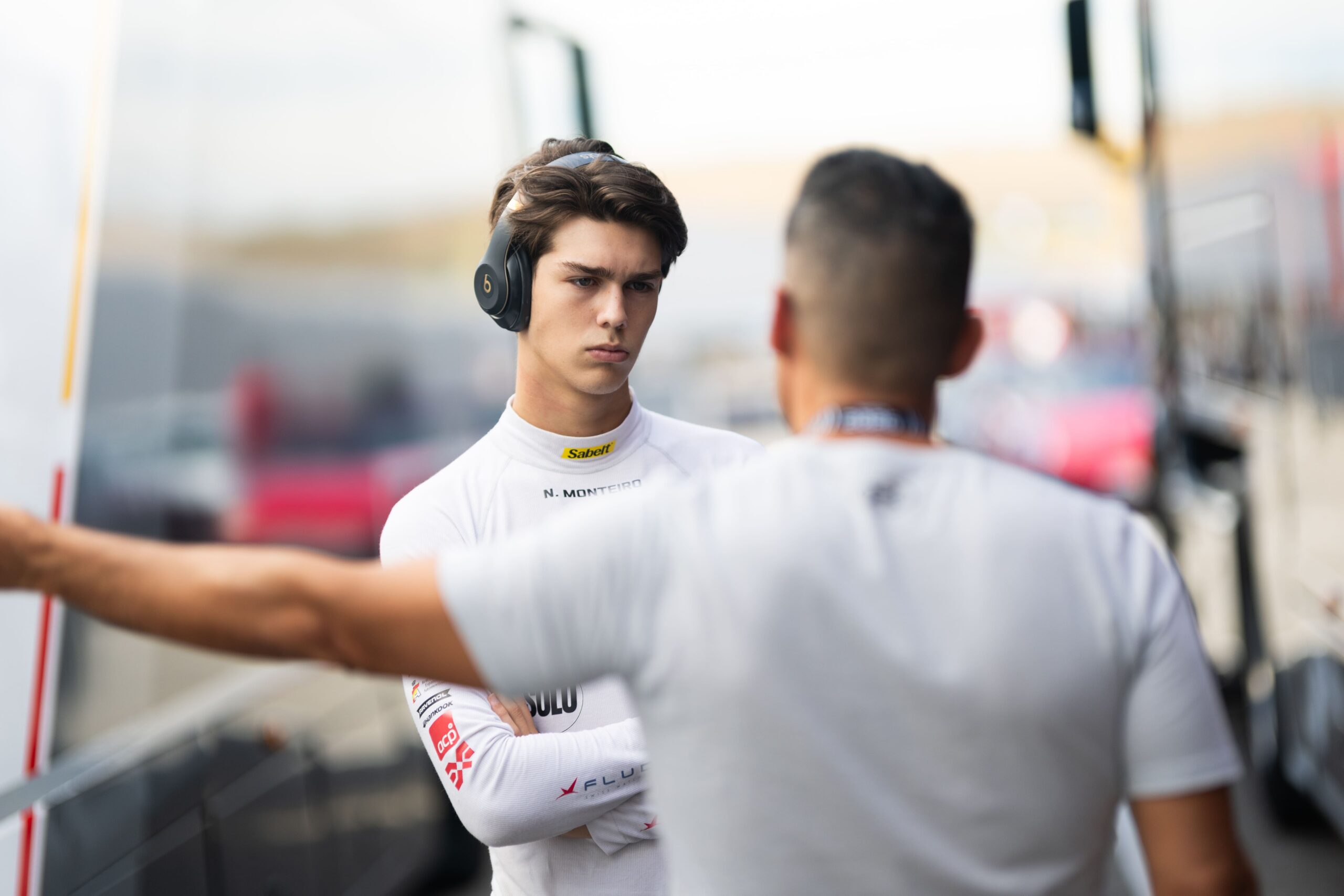
Imagine you’re 15 or 16, strapped into a single-seater on the grid at Jerez or Barcelona-Catalunya with more than 40 rivals around you. Your team, your family and your sponsors are watching, and every result counts toward your future in motorsport.
That’s normal life in the F4 Spanish Championship. Speed and car control matter, of course, but what often separates the drivers who move up the ladder from those who don’t is something you can’t see on the timing screens: mental toughness.
Why F4 Is Such a Demanding Mental Test
F4 is the first step in single-seater racing for most young drivers. It’s often their first full season in a car after karting, and everything is new at once: more power, aerodynamics, data, engineers, media and a much bigger stage.
The 2026 F4 Spanish Championship shows how intense it is:
- More than 40 drivers and 12 teams fighting on the same grid
- Three races per weekend, so there’s almost no time to recover from a mistake
- Seven rounds on demanding circuits in Spain and Portugal, from Valencia and Jarama to Portimão and Barcelona-Catalunya
- A field as close as this means a tenth of a second in qualifying can mean several places on the grid
With such tight margins, the mind becomes as important as the car setup.
Pressure Comes from Every Direction
Young drivers have to manage several kinds of pressure at the same time:
- Performance pressure: qualifying well, scoring points and showing progress race after race.
- Career pressure: knowing that results influence the next step, whether that’s Eurocup-3, Formula Regional or a junior programme.
- Personal pressure: balancing school, travel and training at an age when most teenagers are just worrying about exams.
- Public pressure: live broadcasts, social media and comments from fans, all visible in real time.
Learning to manage all this, rather than ignore it, is one of the biggest lessons of an F4 season.
Staying Calm in the Car
Inside the cockpit, decisions happen in fractions of a second. Defending into Turn 1, judging a late-braking move or reacting to a safety car restart demands total focus.
Drivers work on techniques that help them stay calm and clear-headed:
- Breathing routines before the start and under the safety car to keep their heart rate and nerves in check.
- Visualisation, mentally driving a full lap of the circuit before getting in the car, corner by corner.
- Pre-race routines that are the same every weekend, so the body and mind know what’s coming.
- Short-term focus: thinking about the next corner, not the championship standings.
Dealing with Mistakes and Bad Weekends
Every driver has bad days. A spin in qualifying, contact on the first lap or a technical problem can ruin a race in seconds. With three races per weekend, what really matters is how quickly a driver can reset.
The most resilient drivers treat each session as a separate story. They analyse what went wrong with their engineer, take the lesson and move on, rather than carrying the frustration into the next race. That ability to “close the chapter” is often what turns a difficult Saturday into a strong Sunday.
The Role of the Team and Family
No driver builds mental strength alone. In F4, the support network is key:
- Engineers and coaches help drivers understand the data and turn mistakes into clear, practical improvements.
- Teams create a structured environment where drivers know what’s expected of them.
- Families provide stability, but also need to find the right balance between support and pressure.
- More and more drivers also work with sports psychologists or performance coaches, a practice that is now common across junior motorsport.
Physical Fitness Supports Mental Strength
Mind and body are connected. A driver who is physically fit gets tired less, and a driver who gets tired less stays focused until the chequered flag. F4 drivers train their neck, core and cardio fitness, and they also look after sleep, nutrition and hydration, especially on hot summer weekends in Spain. Good preparation means fewer errors when concentration is under pressure late in a race.
Skills That Last a Whole Career
The mental tools drivers build in F4 go with them for the rest of their careers. Managing nerves, bouncing back from mistakes, communicating clearly with engineers and handling the media are skills needed at every level of motorsport, from Eurocup-3 to Formula 1.That’s why the F4 Spanish Championship isn’t just a school for speed. It’s a school for character, where young drivers learn to perform when it matters most.