Simracing vs. Reality: Can an eSports Driver Succeed in Real-World Single-Seaters? 

Motorsport has changed. Today, a simulator might be the first “car” a young driver ever touches. Simracing has evolved into a professional training and competition platform, with global eSports championships followed by millions of fans. But the big question remains: Can a simracing driver make it in the world of real-life single-seaters?

Simracing: More Than Just a Game  

What once was a casual hobby has become a serious training tool. Modern simulators replicate tracks, weather conditions, and car behavior with astonishing precision. Sim drivers learn to memorize racing lines, manage virtual tire wear, and compete wheel-to-wheel — all without the physical risks but under very real competitive pressure.

This environment has produced talents with sharp reflexes, laser focus, and a strong winning mindset. But is that enough to succeed behind the wheel of a real race car?

From Sim to Track: A Difficult Transition  

The move from simracing to real-life motorsport introduces physical and sensory challenges no simulator can fully reproduce: braking under G-forces, dealing with real crashes, enduring heat inside the cockpit, and feeling every vibration through the chassis. An eSports racer must translate their skills to a more physical, unpredictable, and high-risk setting.

Real Examples: When Talent Crosses the Screen  

Despite the challenge, some simracers have successfully made the jump. One of the most well-known is Jann Mardenborough, a GT Academy winner who raced in Le Mans and single-seaters. Another is Igor Fraga, a Gran Turismo champion who progressed to Formula 3. Their paths show that simracing can be a real gateway to professional motorsport — when paired with on-track training and physical preparation.

F4 Spanish Championship: A Real Platform for Real Dreams  

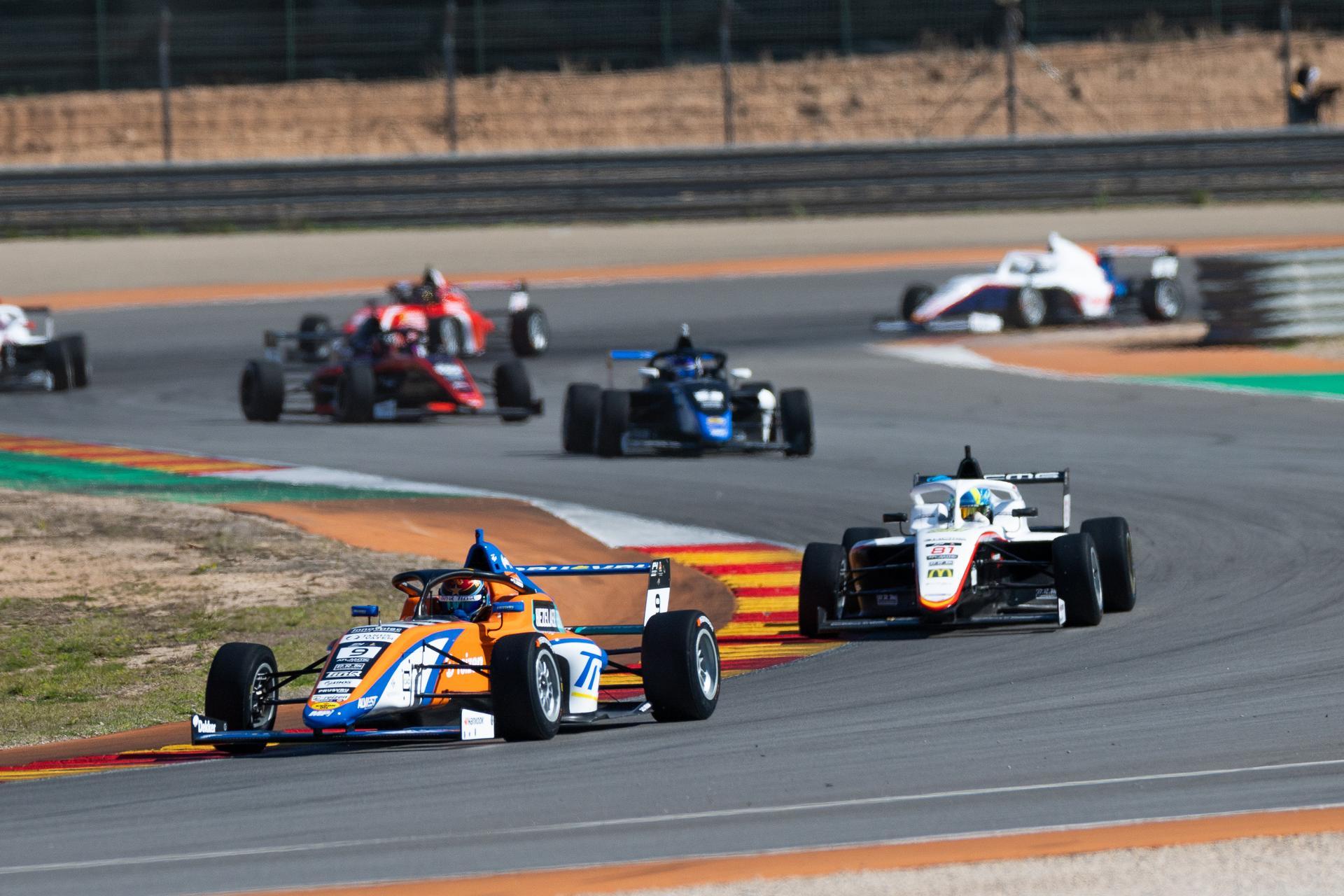
In championships like the F4 Spanish Championship, more and more drivers arrive with a strong background in simulation. But it’s on the actual track where everything is put to the test: adapting to changing weather, communicating with engineers, reading the race strategically — and, most importantly, performing under pressure.

There’s no reset button here. But there is a real chance to grow, learn, and be seen by the motorsport world.

From Sim to Podium: A New Route to F1?  

The debate is still open, but one thing is certain: simracing is here to stay. While it doesn’t replace real track time, it can be a powerful ally in developing the racing drivers of the future. Because in the end, it doesn’t matter if your first overtake was virtual — what counts is how you perform when the lights go out for real.

When the Sky Decides: How Weather Can Change Everything in the F4 Spanish Championship

In motorsport, every corner, every overtake, and every tenth of a second counts. But there’s one factor that escapes the control of engineers, strategists, and even drivers: the weather. In the F4 Spanish Championship, weather conditions are not just background — they’re a key variable that can completely shift the course of a race.

More Than Just a Cloudy Sky

What may seem like light drizzle to the fans is a strategic puzzle for teams. Choosing between slicks or wets, adjusting tire pressure, or even deciding when to head out for qualifying can mean the difference between starting on pole or at the back of the grid.

Rain: A New Track in Seconds

On circuits like Jerez or Navarra, wet tarmac erases the usual references. Drivers must rely more on instinct than telemetry, and raw talent truly shines. Wet races often level the playing field: experience doesn’t always win, and sharp rookies can steal the spotlight.

From Karts to Single-Seaters… and Unpredictable Weather

For many young drivers, F4 is their first real step into single-seaters after years in karting. And while the transition already involves adapting to a heavier, faster, and more complex car, doing so under changing weather conditions takes the challenge to another level.

In karting, the connection to the asphalt is direct. Everything is instinctive, and decisions are made in a split second. But in F4, factors like aerodynamics, tire temperature, car balance, and even engineer communication become essential. And when it rains or the wind picks up, all of that gets harder.

It’s not just about braking earlier or accelerating gently — it’s about understanding how the car transforms lap by lap. It’s about staying focused in the rain, handling aquaplaning, or adapting to a track that’s only drying in certain zones. In short, it’s about learning to think while racing.

A Chance for the Bold

In ever-changing conditions, adaptability is key. Teams who gamble on an alternative strategy can gain big. And drivers who can read the track with every lap — even with no prior wet experience — are the ones who stand out. Because when everyone’s uncomfortable, the ones who adapt fastest win.

In F4, Weather Isn’t an Obstacle — It’s Part of the Challenge

The F4 Spanish Championship is a training ground, but also a test of character. Extreme weather conditions aren’t avoided — they’re embraced. Because every wet session, every cold qualifying, every windy race… is a lesson. And those who learn fastest are the ones who lead.

Penalties in F4: How They Work and Their Impact on the Championship

In the F4 Spanish Championship, the fight for the title is about more than just pure speed. Respecting the sporting regulations is essential—and penalties can dramatically alter the course of a season. But how do they work? What types are there? And how do they affect the drivers?

What Is a Penalty in F4?

A penalty is a sanction issued by the race stewards when a driver or team breaches the technical or sporting regulations. In the 2025 F4 Spanish Championship, these penalties are defined in the official RFEDA-approved sporting regulations and can be applied during or after a race.

Types of Penalties According to the Official Rulebook

In line with Articles 12 and 14 of the sporting regulations, the main penalties include:

  1. Warning: A formal note with no immediate consequence, but it can accumulate.
  2. Reprimand: May be combined with other penalties if repeated.
  3. Time penalty: 5, 10 or 30 seconds added to the final race time.
  4. Drive-through: The driver must pass through the pit lane without stopping.
  5. Stop & Go: Similar to a drive-through but the driver must stop for a set time (typically 10 seconds).
  6. Grid place drop: Applies to the next race.
  7. Start from pit lane.
  8. Disqualification from session or race.
  9. Points deduction: Directly impacts championship standings.

When Are These Penalties Applied?

Penalties may be issued for a variety of infractions, including:

  • Repeatedly exceeding track limits without justification
  • Overtaking under yellow flags
  • Causing avoidable collisions
  • Breaching the start or Safety Car procedure
  • Technical or weight irregularities post-race

How Do They Affect the Championship?

A penalty can cost more than just a position—it can remove crucial points or force a driver to start the next race from the back of the grid. In F4, where competition is tight and talent is abundant, a sanction can redefine a driver’s trajectory across the season.

There is also a cumulative penalty points system: any driver who collects 12 penalty points during the season will be excluded from the next race. This rule reinforces safety and fair competition.

Who Issues the Penalties?

The race stewards, appointed by the RFEDA, issue penalties based on the race director’s reports, data, video footage, and statements from those involved. All decisions are communicated in writing to the teams and may be appealed under the regulation procedures.

Conclusion

Penalties are a vital element of the F4 Spanish Championship. They don’t just punish mistakes—they raise the level of professionalism, teach drivers to race strategically, and reinforce the value of clean racing. In a series where every point matters, respecting the rules might be the smartest path to victory.

Tyres in F4: Composition, Management, and Their Powerful Impact on Performance

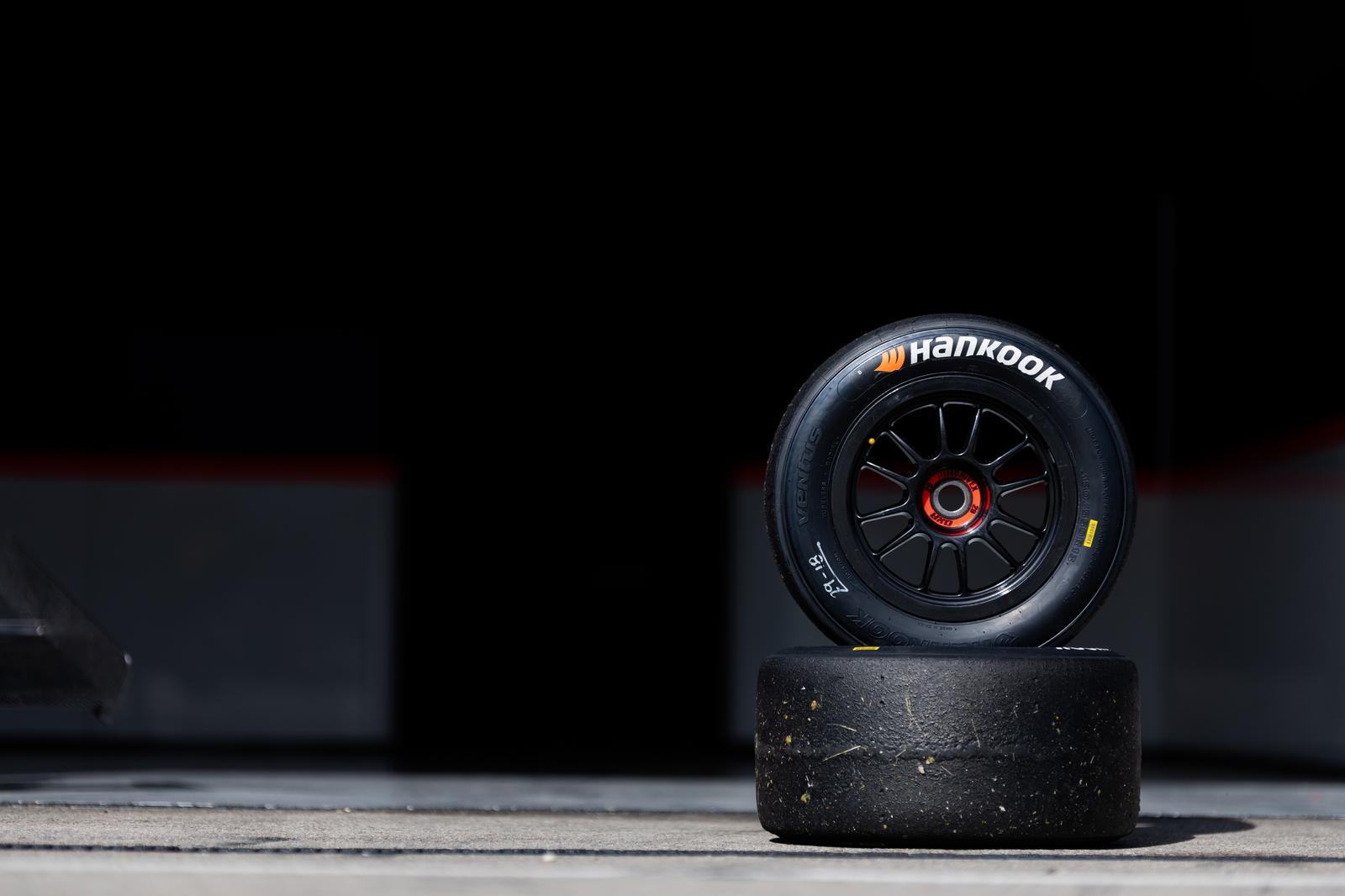
In the thrilling world of motorsport, every component of a race car plays a vital role in achieving top performance. But if there’s one element that literally connects the machine to the tarmac, it’s the tyre. In the F4 Spanish Championship, the official tyres are supplied by Hankook, a globally respected brand known for its relentless innovation and cutting-edge technology in racing.

What makes an F4 tyre truly special?  

The tyres used in F4 are far from ordinary black rings — they are carefully engineered blends of rubber, developed to deliver a precise balance between grip, durability, and thermal performance. These high-performance compounds are designed to operate within a narrow, optimal temperature range, meaning proper heat management can dramatically shift the outcome of a lap — or an entire race.

Tyre management: a race within the race  

Mastering tyre management is an absolutely essential skill that every young driver must develop early in their racing journey. In F4, where every split-second counts, knowing exactly when and how to push the tyres — without overheating or over-wearing them — becomes a strategic advantage. Drivers must swiftly adapt to their driving style, the circuit’s unique layout, and the ever-changing weather conditions — especially on tracks with unpredictable grip or temperature swings, such as Navarra or Motorland.

Throughout the race weekend, teams must meticulously decide how many sets of tyres to use during each session (practice, qualifying, and races), constantly balancing the need for immediate grip with the necessity of saving fresh rubber for key moments. Sometimes, a slightly slower lap today can become the clever move that secures victory tomorrow.

How do they affect performance?  

Hankook tyres offer young drivers an ideal and highly educational platform to learn how to interpret their car’s behaviour. Their performance is consistent, but also demanding: a tyre outside its ideal temperature window quickly loses efficiency, affecting both traction and braking — which can easily lead to lock-ups or understeer.

In qualifying, a fresh, perfectly heated tyre can deliver the incredible grip needed for pole position. But in races, it’s the consistency, patience, and careful lap-by-lap handling that truly separates contenders from champions.

A crucial lesson for the future  

Tyre management isn’t just important for winning in F4 — it’s a fundamental skill for climbing the motorsport ladder. In higher categories like Eurocup-3, FIA F3 or FIA F2, tyre strategy becomes even more critical. That’s why the F4 Spanish Championship is more than a competition — it’s a proving ground for tomorrow’s legends.

First Steps in Motorsport: How Does a Driver Reach F4? 

Behind every driver lining up on the F4 Spanish Championship grid, there’s a story of passion, effort, and countless hours of training. Reaching F4 is no coincidence—it’s the result of a well-defined path that begins long before single-seaters come into play.

Karting: The Cradle of Talent  

Almost all professional drivers start their journey in the world of karting, where they learn the fundamentals: technique, control, and competitiveness. In these entry-level categories, the first skills are developed and, more importantly, the passion for racing is ignited.

Climbing Step by Step  

As a driver grows, so does their ambition. After standing out in karting, many make the leap to national or European championships. This is where they begin to catch the attention of teams, academies, and sponsors. At this stage, having the support of a racing school, a good manager, or even a national federation can make all the difference.

F4: The First Big Challenge  

Formula 4 is the gateway to professional motorsport. And specifically, the F4 Spanish Championship has established itself as one of the most competitive and formative platforms in Europe. Here, young drivers face real race cars for the first time—with aerodynamics, telemetry, race strategies… and lots of pressure.

But it’s also where future stars begin to shine.

Beyond the Track  

Reaching F4 also requires maturity off the track. Drivers learn to work as a team, analyze technical data, speak to the press, and manage their image on social media. Because today, being a driver is not just about being fast—it’s about being professional.

What Comes Next?  

For the most talented and consistent, F4 may only be the beginning. Many of the drivers now racing in Formula 3, Formula 2, or even Formula 1 have passed through this championship. Because F4 doesn’t just teach you how to race… it teaches you how to compete.

For the most talented and consistent drivers, F4 can be just the beginning. Many of the racers competing today in Formula 3, Formula 2 or even Formula 1 started their journey in this championship — and in Eurocup-3, a key step in their development. Because F4 doesn’t just teach you how to race… it teaches you how to compete.

Do you dream of reaching F4? Start preparing now. The road is demanding, but if you carry the passion inside and work with discipline, the light could turn green for you.

F4 Spanish Championship 2025 Calendar: Track Analysis and Challenges

The 2025 F4 Spanish Championship season is about to begin and promises intense excitement across seven rounds in Spain, Portugal, and France. With iconic and challenging circuits, the new campaign will test young talents as they progress toward higher levels of motorsport.

We analyze each circuit and the challenges they present for drivers and teams.

Round 1: MotorLand Aragón (March 28-30)

Location: Spain
Length: 5.344 km
Turns: 18

The season kicks off at MotorLand Aragón, a technical and demanding circuit. Featuring a mix of fast and slow corners, it stands out for its long back straight, where slipstreaming will play a key role in overtaking. Tire management will be crucial due to the high lateral forces in corners like 8 and 9, along with heavy braking into the final hairpin.

Key challenge: Adapting to grip levels on a track with distinct sectors.

Round 2: Circuito de Navarra (May 2-4)

Location: Spain
Length: 4.313 km
Turns: 17

The Circuito de Navarra has undergone a major transformation to enhance the driving experience and increase overtaking opportunities. The track extension by 650 meters has introduced new sections that improve flow and dynamism throughout the layout.

Key challenge: A short yet technical track that leaves no room for mistakes.

Round 3: Autódromo Internacional do Algarve (June 6-8)

Location: Portugal
Length: 4.653 km
Turns: 15

Portimão is famous for its elevation changes and blind corners. It challenges drivers with downhill braking zones and traction in uphill sections, such as the iconic turn 8. Additionally, the high-speed final corner will make slipstreaming crucial on the main straight.

Key challenge: Mastering elevation changes and limited visibility in certain corners.

Round 4: Circuit Paul Ricard (June 20-22)

Location: France
Length: 5.842 km
Turns: 15

The only French circuit on the calendar is famous for its long Mistral Straight, where top speed and aerodynamics will be critical. The final sector, featuring technical corners, will test drivers’ skills in heavy braking and quick direction changes.

Key challenge: Finding the right balance between straight-line speed and corner grip.

Round 5: Circuito de Jerez (September 19-21)

Location: Spain
Length: 4.428 km
Turns: 15

Jerez is a circuit with a rich motorsport history and is known for its smooth flow and medium-speed corners. Traction out of the final turn will be crucial for overtaking on the main straight. Additionally, the typically high temperatures in September may affect tire degradation.

Key challenge: Maintaining stability in fast corners and managing tire wear in high temperatures.

Round 6: Circuit Ricardo Tormo – Valencia (October 17-19)

Location: Spain
Length: 4.005 km
Turns: 14

Valencia is a technical layout with many slow-speed corners, testing drivers’ braking and acceleration capabilities. The short straights make overtaking difficult, making qualifying performance crucial.

Key challenge: Maximizing corner exits to defend or attack positions.

Round 7: Circuit de Barcelona-Catalunya (November 14-16)

Location: Spain
Length: 4.675 km
Turns: 14

The season finale will take place in Barcelona, a track well-known to drivers due to its presence in multiple motorsport categories. Its mix of fast and technical corners demands a well-balanced car. Turn 1 is a key overtaking spot, while the final chicane can create differences in the closing laps.

Key challenge: Aerodynamic balance and tire wear management in the final sector.

A Season Full of Variety and Unique Challenges

The F4 Spanish Championship 2025 calendar offers a balance between fast, technical, and demanding circuits. Drivers must adapt to different track styles and conditions to stand out in the championship.

Get ready for an action-packed season in the F4 Spanish Championship 2025!

Breaking Limits: Women Revolutionizing Motorsport

Motorsport, historically dominated by men, has been the stage for inspiring stories of women who have broken barriers, proving that talent knows no gender. These pioneers have left an indelible mark on the history of motorsport, paving the way for future generations of women to pursue their dreams, both on and off the track.

Formula 1: Women Who Reached the Pinnacle of Motorsport

The role of women in Formula 1 has historically been overlooked, to the point where many are unaware that women have competed and excelled in this category.

María Teresa de Filippis was the first woman to participate in Formula 1, debuting at the Belgian Grand Prix in 1958. She faced not only the challenges of the circuit but also an environment that was just beginning to accept women in motorsport. Her courage and determination laid the foundation for future generations.

Seventeen years later, Lella Lombardi achieved a historic milestone by becoming the only woman to score points in a Formula 1 race. This happened at the 1975 Spanish Grand Prix, where she finished sixth, solidifying her place in motorsport history.

In more recent times, Susie Wolff shattered another glass ceiling as the first woman in over 20 years to participate in an official Formula 1 session. Joining the Williams team as a development driver in 2012, her participation in the 2014 British Grand Prix was not just a personal achievement but also a symbol of increasing inclusion in a male dominated sport.

However, Wolff’s impact extends far beyond her time in Formula 1. Over the years, she has been a passionate advocate for initiatives aimed at promoting female participation in motorsport.

Empowering the Next Generation

In 2016, Susie Wolff founded the Dare to be Different program, aiming to inspire women to challenge norms and enter the world of motorsport, where opportunities for women have historically been limited. This initiative sought to change perceptions, create a supportive community, and provide women with the tools to share experiences, develop skills, and achieve their dreams.

In 2019, the FIA Women in Motorsport Commission partnered with Susie Wolff and Dare to Be Different to launch an educational program for girls aged 8 to 18, which was later renamed Girls on Track.

Girls on Track aims to spark interest in motorsport among girls and young women. Through a series of educational activities and events, the project provides pathways for discovering potential in areas such as driving, engineering, and management within motorsport. The initiative has expanded globally, offering opportunities and mentorship to thousands of young women eager to explore this thrilling sport.

On a national level, programs like the Catalan Dona Gas facilitates. Supported by the Equality Commission of the Catalan Motorsport Federation (FCA), it focuses on promoting female talent in motorsport through karting, rallies, and official roles. By providing training, guidance, and financial support, Dona Gas facilitates women’s participation in motorsport while promoting resilience, teamwork, and leadership through mentorship, coaching, and exclusive competitions.

Having female role models in motorsport is crucial for inspiring new generations to chase their dreams, showing them that achieving the highest level is possible regardless of gender. However, young women aspiring to compete in Formula 1 or other international competitions often face doubts about their potential in a historically male dominated environment. This is where initiatives like the F1 Academy and W Series play a critical role.

These competitions not only provide platforms to showcase female talent but also reshape the narrative around motorsport. These championships serve as more than just symbols of representation; they are constant reminders that women belong in all facets of motorsport. With dedication, effort, and the right opportunities, they can achieve anything they set their minds to.

Beyond the Track

Motorsport extends beyond the driver’s seat, and it is vital to recognize the contributions of women in all roles that shape this thrilling sport. While drivers have historically been the most visible figures, women play essential roles in engineering, team management, leadership, communication, event organization, and marketing. The true evolution of motorsport lies in the inclusion of women at every level of the industry.

“You can’t be what you can’t see” — visibility is a key factor for change in any industry, and motorsport is no exception. This visibility not only benefits women already involved in the sport but also attracts more fans who seek reflections of their passions and aspirations.

Female fans are increasingly influential, not only as spectators but also as creators of accessible and educational content about the sport. Through social media, many women are demystifying motorsport, explaining technical aspects, rules, strategies, and race dynamics in simple terms. This content reaches new audiences, empowering women to engage as informed and active followers. Content creators are vital for making motorsport more inclusive and accessible, offering pathways for more women to connect with the sport as fans, professionals, or future participants.

According to a 2021 survey by Motorsport Network, female participation in F1 fandom grew significantly, representing 18.3% of the total sample — an 83% increase since 2017 and a 177% increase compared to 2015.

Additionally, in November 2022, F1 CEO Stefano Domenicali stated that around 40% of F1 fans were women, an 8% increase since 2017.

These data reflect a growing trend in the participation and interest of women in Formula 1 in recent years, which can be extrapolated to other motorsport categories.

Legacy and Future

At the F4 Spanish Championship, we are committed to diversity and inclusion, fostering the next generation of drivers, both male and female.
Breaking limits is not just about skill; it’s about attitude.

Over the years, our championship has featured outstanding female drivers who have left an indelible mark on the competition:

  • Marta García (2016, 2017)
  • Belén García (2019)
  • Nerea Martí (2019, 2024)
  • Irina Sidorkova (2019)
  • Léna Bühler (2020)
  • Emely de Heus (2021)
  • Lola Lovinfosse (2021, 2022)
  • Aurelia Nobels (2022)
  • Victoria Blokhina (2022)
  • Lia Block (2024)
  • Joanne Ciconte (2024)

Our goal is to continue expanding this list of drivers in upcoming seasons and establish our championship as the platform where tomorrow’s talent, regardless of gender, can find their opportunity to shine.

Key Features of Circuit de Barcelona-Catalunya: A Perfect Finale for the F4 Spanish Championship

As the F4 Spanish Championship concludes its season at the Circuit de Barcelona Catalunya, it’s clear that this iconic track offers a unique combination of challenges and opportunities that make it ideal for an intense season finale. Known for its technical turns, high-speed straights, and top-tier facilities, the Circuit de Barcelona-Catalunya is more than just a racetrack; it’s a proving ground for emerging talents in the world of motorsport. Here’s a closer look at what makes this circuit such an essential part of the F4 Spanish Championship.

1. A Technically Demanding Layout

The Circuit de Barcelona-Catalunya is famous for its demanding layout, testing every driver’s skill and adaptability. With a mix of tight, technical turns and long, fast straights, the track provides an all-around challenge that rewards precision, speed, and control. From the sweeping curves of Turn 3 to the hairpin at Turn 10, each section requires a unique approach, making it a fitting finale where only the most versatile drivers thrive. For our young F4 talents, mastering this circuit is an invaluable step in their development.

2. Opportunities for Overtaking and Strategy

Overtaking opportunities are plentiful at the Circuit de Barcelona-Catalunya, especially on the long straight heading into Turn 1. This feature sets the stage for strategic moves and thrilling side-by-side action, rewarding those who can outsmart and outmaneuver their rivals. The championship’s final round here showcased just how crucial these overtaking zones can be, as drivers fought for every position in a race where every maneuver counted.

3. Cutting-Edge Safety Enhancements

Safety is paramount in motorsport, and Circuit de Barcelona-Catalunya’s recent upgrades ensure the track remains one of the safest in Europe. With reinforced barriers, updated runoff areas, and re-engineered corner designs, the track enables drivers to race with confidence. These enhancements support the development of young drivers, allowing them to push their limits in a secure environment while preparing for the demands of higher-level competitions.

A Perfect Stage for Aspiring Champions

The Circuit de Barcelona-Catalunya offers an experience that is both challenging and rewarding, making it the ideal venue to conclude the F4 Spanish Championship. The track’s unique layout, strategic overtaking zones, and high standards of safety and sustainability create an environment where aspiring champions can shine. As the season comes to an end, this circuit reminds us why it’s not only a favorite among drivers but a crucial element of motorsport in Spain. For our F4 drivers, mastering this track is a milestone on their journey toward the top. Ending the season at such a prestigious venue not only raises the stakes but also allows them to gain insights, develop skills, and take a step closer to their dreams.

The Evolution of Technology in Single-Seaters

The world of motorsport has always been synonymous with innovation. From the first race cars to today’s Formula 4 (F4) single-seaters, technological evolution has been a key factor in performance, safety, and competitiveness. Over the years, advancements in aerodynamics, materials, electronics, and simulation have transformed the sport, bringing drivers to new levels of excellence.

1. Aerodynamics: More Speed, More Stability

In the early days of motorsport, cars were essentially conventional vehicles adapted for racing. Today, aerodynamics is a fundamental science in the design of single-seaters. In F4, cars are designed to cut through the air with minimal resistance, increasing their speed on straights. Adjustable wings and other aerodynamic components ensure stability in corners and improve grip in all conditions.

2. Lightweight and Strong Materials

The evolution of materials has been a quantum leap for single-seaters. As teams aim to reduce weight without compromising strength, materials like carbon fiber and advanced composites have replaced steel and aluminum. These new materials are not only extremely light but also offer greater resistance in case of impacts, contributing to driver safety.

3. Advanced Electronics and Telemetry

F4 single-seaters are equipped with cutting-edge technology that, until recently, was only available in the highest racing categories.Telemetry allows teams to monitor every detail of the car’s and driver’s performance in real-time. Data such as speed, tire pressure, engine RPMs, and brake temperature are transmitted directly to engineers, who can adjust race strategy based on this information.

4. Simulation and Virtual Training

Another area that has undergone a radical evolution is driver training. Today, simulation plays a crucial role in preparing young talents for the F4 Spanish Championship. Thanks to simulators, drivers can practice in controlled environments that replicate race conditions to perfection. This technology not only helps improve skill and confidence but also reduces training costs and wear on the cars.

5. Safety: The Most Important Factor

One of the most significant advancements in single-seaters has been safety. From the implementation of the Halo, a protection system that surrounds the driver’s head to prevent direct impacts, to the improvement of brake systems and safety harnesses, technology has been crucial in saving lives. The safety standards of the F4 Spanish Championship are constantly reviewed to incorporate the latest innovations and ensure the well-being of drivers.

Conclusion

Formula 4 is not only a stepping stone for young drivers aiming to reach the higher categories of motorsport, but also a testing ground for technological evolution. Every race is a reminder of how science and engineering intertwine with the sport to deliver faster, safer, and more exciting performances. The evolution of technology in single-seaters continues to advance, and the future promises even more surprises and improvements for this thrilling sport.

The Championship Where Franco Colapinto’s Dream Began to Come True: From Spanish F4 to Formula 1 with Williams Racing

Franco Colapinto (21, Pilar, Buenos Aires) has become the first driver to emerge from the F4 Spanish Championship, after his title in 2019, to reach the pinnacle of motorsport: Formula 1.

The Argentine driver has been chosen by Williams Racing to replace Logan Sargeant until the end of the season, starting with the Italian Grand Prix (September 1, 2024).

Nine Grand Prix for Franco Colapinto

With the 2025 F1 grid practically closed, Colapinto will have nine Grand Prix ahead of him to showcase his talent with the British team, which placed its bet on him in 2022 by making him a member of their young driver academy. He recently made his debut at the wheel of the FW46 during Free Practice 1 at the British Grand Prix.

Argentina hasn’t had a driver in the category since 2001, with Gaston Mazacane. To find the last Argentine to stand on the top step of the podium, one has to go back to Carlos Reutemann, who also drove for Williams.

Franco Colapinto hasn’t had an easy path to reach Formula 1, but in every opportunity, he has caught the attention of those most knowledgeable in motorsport.

He debuted in single-seaters with a wildcard entry alongside Drivex in 2018, participating in the final round of that F4 Spanish Championship’s season as preparation for his first full year in 2019.

That season was historic for Drivex, Fernando Alonso’s FA Academy, and the Argentine driver, as they clinched both titles with 11 wins, 13 podiums, 10 poles and 10 fastest laps for the young talent from Buenos Aires.

Since then, he hasn’t stopped growing, both in single-seaters and prototypes (LMP2), even racing in the 24 Hours of Le Mans.

A race winner in the two tiers below the big league (F3 and F2), Colapinto is ready for a new challenge in his racing career and to fulfill the dream that many young drivers, like him, pursue starting in the F4 Spanish Championship.

This is what dreams are made of

“It’s an honor to debut in Formula 1 with Williams. This is what dreams are made of. The team has an incredible history and a mission to accomplish: to return to the front, something I can’t wait to be part of. Joining F1 mid-season will be a huge learning experience, but I am ready for the challenge, and I am fully focused on working as hard as I can with Alex and the team to make it a success,” said Franco Colapinto.


Suscribe to our newsletter